Somewhere in Europe this week, a service business lost a deal it should have won. The prospect asked for a quote on Tuesday. The owner, still finishing Monday's work, promised to send it by Thursday. The competitor's quote landed on Wednesday morning. The prospect signed on Wednesday afternoon. Nobody did anything wrong. The loser was simply slower, and in a market where the first credible quote usually wins, slowness is the only sin that matters.
The quote is the last manual step between a hot lead and a signed contract. Invoicing is already digitized. Booking can be automated. Follow-up can be automated. But the document that actually decides who gets the job is still assembled by hand, from memory, over two or three days. This post covers the automation that removes that step: what the systems actually do in 2026, the real cost and return math, where they break, and how to start this quarter.
The Speed-to-Quote Math
The firm that answers first wins about half the deals. Most EU service businesses still answer on a two-day delay.
Industry research on configure-price-quote systems consistently finds that the first firm to respond wins roughly half of all deals. The classic Harvard Business Review finding on lead response still holds: contacting a lead within one hour makes you 7x more likely to qualify them. Yet when Zoho surveyed scheduling and response behaviour in 2026, 40 percent of organizations took more than an hour to respond to an inquiry by email, and 23 percent took more than six hours.
The proposal stage is worse. A typical service business spends six to nine hours assembling a custom proposal: pulling numbers from spreadsheets, copying paragraphs from old documents, arguing internally about scope. The result ships two to three days after the discovery call, which is exactly the window in which the prospect is comparing you against faster competitors. Speed to quote is not a nicety. It is the mechanism that decides who wins.
The pattern is identical one step earlier in the funnel. We wrote about the same lever in the post on lead follow-up economics: response speed is the biggest conversion lever you control. The quote is that same lever, applied at the moment the prospect is most serious.
What AI Proposal Generation Actually Does
The 2026 generation of systems does not replace your sales process. It compresses the mechanical middle of it.
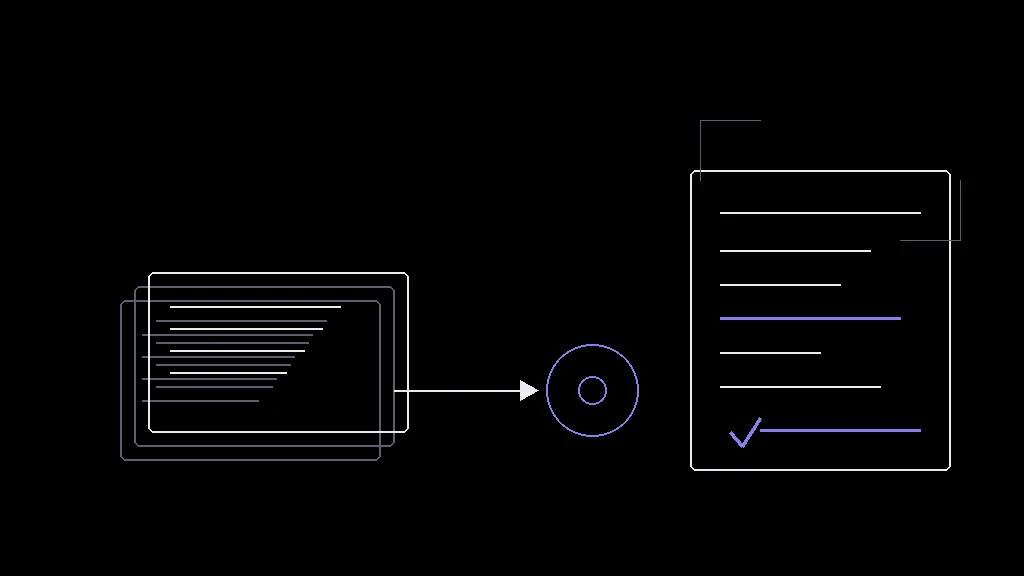
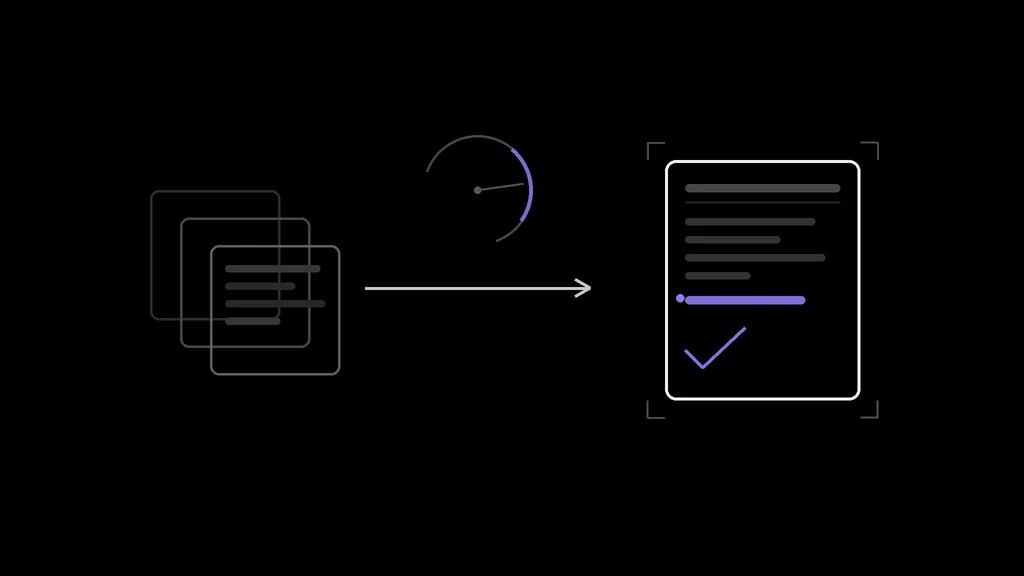
A well-designed system takes three inputs: the CRM record for the opportunity, the transcript or notes from the discovery call, and your library of past proposals. It produces a draft that is 80 to 90 percent of the way to sendable. Your sales lead reviews it, edits the sections that need judgment, and hits send. The writing is not the hard part. The architecture around it is.
A structured intake, not a form
If your salesperson has to fill a fifteen-field form after every call, they will not do it. The systems that stick either transcribe the call automatically through a Whisper pipeline or similar, or pull structured fields straight from the CRM. The AI reads that raw material with no manual re-entry and no missing data.
A pricing engine, not a language-model guess
This is where most DIY attempts fall apart. The AI can write a beautiful executive summary, but if the pricing table is wrong the proposal is worthless. You need a deterministic pricing layer: a real calculation that outputs the numbers and hands them to the AI to explain in prose.
Numbers come from code, narrative comes from the model. If the language model can invent a discount, it will eventually invent a discount.
A style-matched draft generator
The AI takes the intake, the pricing, and a curated library of fifteen to thirty of your best past proposals, tagged by industry and deal size. That library is what lets the output sound like your firm. Without it you get the corporate-speak that makes every AI-written proposal on the market sound identical.
A human review layer
Every proposal goes through a review screen where the salesperson sees the draft, the source data, and a confidence score per section. Low-confidence sections are flagged for edits. High-confidence sections are accepted with one click. The whole review takes ten to twenty minutes for a mid-sized deal, versus four to eight hours writing from scratch.
The ROI Math
The gains show up in three places: cycle time, consistency, and close rate.
The most recent public deployment we can point to comes from a Canadian IT firm that published its numbers in August 2026. They used to spend six to nine hours on each statement of work. After automation they send a fully personalized proposal in twenty minutes, and their win rate climbed eleven points because prospects no longer cool off between the discovery call and the document.
The pattern repeats across industries. A Quebec City accounting firm went from eight proposals a month to twenty-six without adding a salesperson. A marketing agency cut proposal-writing time by 72 percent and used the freed capacity to run more discovery calls. Close rates generally climb five to fifteen points, not because the AI is a better writer, but because a proposal that lands within twenty-four hours of the call catches the prospect at peak interest.
The cost side is equally concrete. For a business sending twenty to fifty proposals a month, a fitted system costs roughly €15,000 to €40,000 to build, depending on how deep the CRM and pricing integrations go. Operating costs land between €200 and €550 a month for model tokens, transcription and hosting. Payback runs three to six months for high-value B2B proposals, six to twelve months for lower-ticket volume. The businesses that skip the payback entirely are the ones already losing deals to slow response. For them, the first month of same-day proposals often repays the whole build.
The businesses winning in 2026 are not the ones with the fanciest AI. They are the ones that turned a slow, expensive, unpredictable part of their sales process into a fast, cheap, consistent one.
Build vs Buy: Where Off-the-Shelf Stops
Off-the-shelf proposal tools cover about 60 percent of what a fitted system does, and for some businesses that is the right answer.
PandaDoc AI, Proposify AI and HubSpot's proposal generator run from roughly €50 to €300 per user per month. They are a legitimate starting point if you send fewer than fifteen proposals a month and your pricing is simple. Above that volume, or whenever pricing is even moderately configurable, the gaps start to hurt: no deterministic pricing engine, no style library from your own documents, weak integration with the CRM where your pipeline actually lives.
The fitted alternative is a system built around your operation: the pricing engine your estimators actually use, your past proposals as the style library, your CRM as the intake. The same economics we laid out in the build-vs-buy framework apply here, and the break-even point is reachable inside a year.
There is a second reason the fitted route matters in the EU right now: the quote-to-invoice loop. Estonia has run e-invoicing for years, and the rest of the union is catching up through the ViDA framework and national mandates, a timeline we covered in the post on AI invoice processing. Once invoices are structured and automated, the quote is the last paper step in the entire revenue chain. A proposal system that feeds a signed quote straight into invoicing makes the loop fully digital, and that integration is where off-the-shelf tools run out of room.
The EU AI Act Angle
The transparency rules that came into force on August 2, 2026 apply to AI-generated quotes, but the compliance cost is close to zero.
Article 50 of the AI Act requires that people be told when they are interacting with an AI system. A quote drafted by AI and reviewed by a human before it is sent is low risk: the customer is interacting with your firm, not with the AI. A fully automated flow where the prospect receives the AI's output directly needs a clear disclosure on the document. We went through the full compliance checklist for small businesses in the post on the August deadline.
If a human reviews and sends the quote, the AI Act costs you one line of internal documentation. If the AI sends it directly, add a disclosure to the customer. Neither is a reason to postpone automation.
The Ways It Fails
The failures are predictable, and they are architectural, not technical.
Skipping the pricing engine
Teams get impressed by the AI's writing and forget that a proposal is legally binding. If the model hallucinates a discount or misreads a rate card, you owe the client that price. The fix is architectural: pricing is deterministic code, not model output. This is non-negotiable.
Over-personalizing on the wrong signal
Feed the model every LinkedIn post the prospect wrote in the last five years and you get a proposal that reads like it was written by someone following them. Personalize on business context: company size, industry, pain points from the call. Not personal trivia.
Skipping the style library
A generic prompt produces generic output. A prompt grounded in fifteen of your actual past proposals produces something that sounds like your firm. Building that library takes half a day and delivers most of the perceived quality.
A review interface that fights the team
If reviewing an AI draft is more work than writing from scratch, adoption dies within a month. A good review screen highlights what changed from the template, shows confidence scores, and lets the salesperson accept, edit or reject each section in isolation.
If a vendor shows a demo where the AI writes a whole proposal from a two-line prompt, walk away. The writing is the easy part. The pricing engine, the style library and the review loop are the product.
How to Start This Quarter
Do not build the whole system on day one. The projects that ship start narrow.
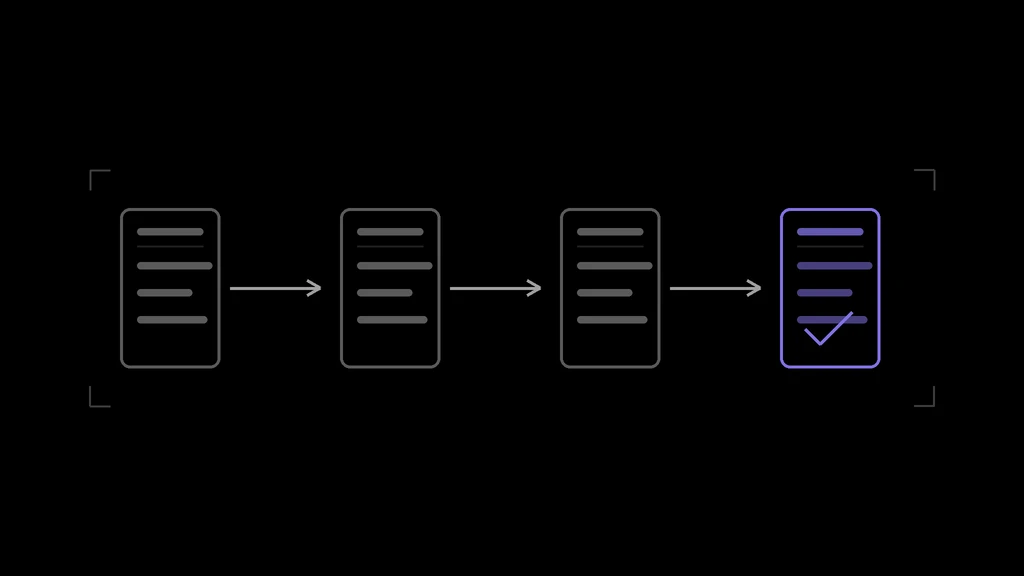
Pick the one proposal type you send most often. Extract fifteen to twenty of your best past examples. Map the pricing logic on paper before anyone writes code. Wire up the simple pipeline: intake, pricing, draft, review. Ship it to one salesperson for a month, tune it on real feedback, then expand. With the current SDKs, a two-developer team can ship a working first version in four to six weeks.
At Nordspike we start every engagement the same way: a paid audit of your actual quote flow. Volume, pricing logic, CRM setup, the proposals you are proud of. You get a report with the ROI calculation for your numbers before we build anything, and the audit is yours to keep either way. Deployments run in weeks, data stays on EU-hosted infrastructure or on your own servers, and the process is warrantied for twelve months.
The businesses that win the next round of deals are not the ones with the most impressive AI. They are the ones whose quotes land first. The gap between a two-day quote and a twenty-minute quote is not a technology gap. It is a decision gap, and the decision is available to any service business that wants to take it.