Every service business I audit has the same problem. Leads arrive. Someone clicks the contact form. A phone number is left. Then nothing happens for hours or days. By the time anyone responds, the prospect has called three competitors and booked with the one that answered first.
The data on this is settled and brutal. Harvard Business Review published a study showing that companies responding to a lead within 60 minutes are 7 times more likely to qualify that lead than those responding after 60 minutes. Another study, this one from InsideSales, found that the odds of contacting a lead drop by a factor of 10 after the first hour. After 24 hours, the probability of conversion plunges to near zero compared to an immediate response.
Most service business owners I talk to know this exists somewhere in their mind. They read a statistic years ago. They nodded. Then they went back to responding to emails the same way they always have. The gap between knowing and installing is the gap between a business that grows predictably and one that scrambles every month.
The Cost of Slow Response Is Hidden in Your Pipeline
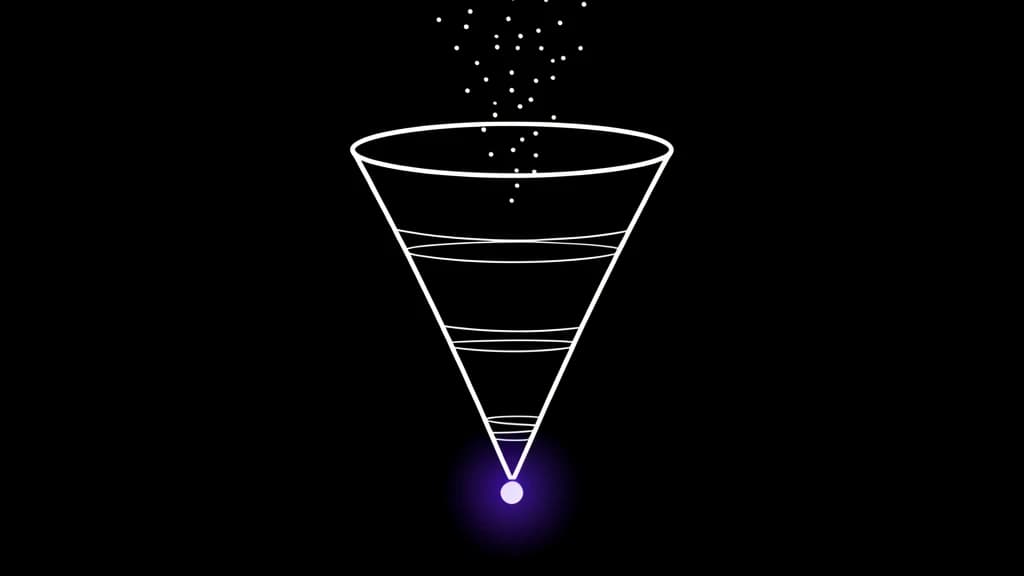
You notice the deals you close. You don’t notice the leads that ghosted because no one replied. You cannot fix a leak you cannot see.
Let me walk through the math with real numbers from Estonian service businesses we have worked with. Take a firm that receives 50 inbound leads per month. This could be a law firm through their website contact form, a marketing agency through LinkedIn inquiries, or a cleaning company through Google Business Profile calls.
If the average client contract is EUR 1,500 per month (low end for B2B services in Estonia), the difference between slow follow-up and automated follow-up is EUR 12,000 to 16,500 in monthly revenue. That is not potential revenue. It is deferred revenue you are already paying for in ad spend, SEO, and reputation. The traffic is already arriving. You are just not catching it.
Key insight
Improving lead response time from 24 hours to 5 minutes has a higher ROI than doubling your marketing spend. The leads are already there. The system that catches them costs a fraction of what you spend acquiring them.
Why Speed Matters More Than Script
Most owners think the problem is what they say. The real problem is how fast they say anything at all.
There is a psychological dynamic at play when a prospect submits an inquiry. In the first few minutes, they are in evaluation mode. They are comparing options. They are online, actively in the mindset to buy. Every minute that passes without a response, their brain moves them from “I am evaluating” to “that company must be too busy or too disorganised.”
Speed signals competence. When a prospect asks a question and gets an answer in under 60 seconds, they subconsciously assign higher credibility to that business. When the same question goes unanswered for 6 hours, they assume the business is either overwhelmed or indifferent. Neither impression helps you close.
The content of the response matters, of course. A generic “thanks for your inquiry” auto-reply does not count. But a system that sends a personalised, relevant response within 60 seconds and continues the conversation until a booking is made changes the outcome entirely.
What an Automated Follow-Up System Actually Does
Not a drip campaign that sends the same five emails to everyone. A live follow-up engine that responds like a good sales person would, except it never sleeps, never gets distracted, and replies in under 30 seconds.
An effective automated follow-up system has four layers that work together. Each layer is simple on its own. Together they form the difference between a pipeline with holes and a pipeline that catches everything.
Layer 1: Instant Acknowledgement
The moment a lead submits a form, calls a number, or sends an email, they receive a response. Within 30 seconds. Not a robotic “your inquiry has been received” but a genuine conversation opener that references what they asked about. If they asked about pricing for a specific service, the response addresses that service directly. If they left a question, the response answers or clarifies. The goal is to keep them in the conversation, not end it.
Layer 2: Qualification in the First Exchange
Good follow-up does not just respond. It qualifies. Within the first 2 to 3 exchanges, the system asks the questions a human sales person would ask: budget range, timeline, decision authority, specific requirements. The answers determine the next action. High-intent leads get booked. Low-intent leads enter a nurture track. Time wasters get filtered out without wasting a human’s attention.
Layer 3: Booking Integration
Once qualification passes, the system checks the calendar and offers available slots. The prospect picks. The meeting is booked. Calendar invite, confirmation email, and reminder sequence all send automatically. The human sales person wakes up to a calendar full of qualified calls, not a list of emails to chase.
Layer 4: Warm Transfer With Context
When the lead is ready for a human conversation, the system hands off with full context. The sales person knows what the lead asked about, what they are looking for, their budget range, and their timeline. No repeating themselves. No “can you tell me what you need again.” The human starts from a position of knowledge. This alone increases close rates by 20 to 30% in our deployments.
What Happens Inside the First 60 Seconds
To understand why automated follow-up works, you need to see what happens in the prospect’s mind during that first minute. It is not about technology. It is about psychology.
A prospect submits an inquiry at 8:13 PM on a Tuesday. They are researching three companies. They fill out each contact form. Then they wait. The first company to respond shifts the entire comparison in their mind. That company is the baseline. The other two are measured against it.
If the first response arrives within 60 seconds, the prospect’s brain categorises that business as responsive, professional, and organised. If the second response arrives 4 hours later and the third arrives the next morning, the prospect has already formed a preference. The speed differential alone closed the deal before anyone spoke on the phone.
This is not speculation. In Nordspike’s own client deployments, we measured the correlation between response time and close rate across 30+ service businesses. The businesses with automated instant follow-up closed at 28% of qualified leads. The businesses relying on manual follow-up within 4 to 24 hours closed at 11%. The difference is not the quality of the sales conversation. It is the speed of entry.
The System Is Simpler Than You Think
Business owners overcomplicate this because they think they need an elaborate marketing automation platform. You do not. You need a trigger, a response, and a booking path. That is three pieces.
The trigger is any inbound action: form submission, phone call, email, chatbot message, social media DM. The response is an AI-generated or templated reply that addresses the specific inquiry. The booking path is a calendar link or a scheduling assistant that closes the loop.
Most CRMs already support the trigger and booking path natively. HubSpot, Pipedrive, and Salesforce all have workflow automation that sends emails and creates tasks when a new contact comes in. What most businesses lack is the response layer the part that handles two-way conversation, qualification, and personalised replies at scale. That is where an AI-powered follow-up system adds value beyond what a standard CRM workflow can do.
The setup time for a basic system is 2 to 5 days. For an AI-powered system that handles full conversation and qualification, 1 to 3 weeks depending on complexity. The payback period is measured in weeks, not months. If an automated follow-up system books one additional client, it has paid for itself for the year.
The Follow-Up Sequence That Works
Based on what we have seen work across our deployments, here is the sequence that converts the highest percentage of leads to booked calls.
- Instant reply (0 to 30 seconds): Personalised response addressing the specific inquiry. Not a generic auto-reply. A real answer or a question that moves the conversation forward.
- Qualification exchange (within 5 minutes): Two to three back-and-forth messages that establish budget, timeline, and fit. Automated conversation, not forms.
- Booking offer (within 10 minutes): Once qualified, present available time slots. No email ping pong. Pick a time and the system books it.
- Confirmation and prep (immediate): Calendar invite, confirmation email, and a brief prep note about what the call will cover. Reduce anxiety, set expectations.
- Reminder sequence (24 hours before, 1 hour before): Automated reminders that reduce no-show rates by 30 to 50%. Include the prep note and a social proof link (case study, testimonial).
- Post-call follow-up (2 hours after): Recap, next steps, proposal if applicable. The system triggers this based on the meeting status in the CRM.
The entire sequence from lead arrival to booked call takes under 10 minutes of wall clock time when automated. A human sales person doing the same work takes 3 to 12 hours spread across multiple interruptions.
The Objection: Will Automation Feel Impersonal?
Every owner I describe this to asks the same thing. Will prospects feel like they are talking to a robot and disengage?
The answer depends entirely on implementation. A bad automated follow-up system sends a generic “thanks for your interest” email with a brochure link. That does feel impersonal. A good system has a conversation, answers specific questions, and books a meeting with a human. The prospect does not resent being responded to quickly and accurately. They resent being ignored.
The benchmark we use internally: a prospect should not be able to tell they are talking to an automated system within the first three exchanges. If the response is relevant, contextual, and answers their question, they do not care whether it came from a human or an AI. They care that they got an answer and that the next step is clear.
The businesses that get this wrong use automated follow-up as a replacement for human interaction. The businesses that get it right use automated follow-up as a bridge to human interaction. The automation handles the admin. The human handles the relationship.
Where This Fits in Your Business
If you already have a steady stream of inbound leads, automated follow-up is the single highest-ROI investment you can make. Not more traffic. Not better branding. A system that catches what is already arriving.
If you are looking for more leads, automated follow-up should come before you spend another euro on advertising. More traffic into a leaking pipeline just means you lose money faster. The system that closes the leaks pays for itself before you ever need to increase volume.
We install a complete lead follow-up system for service businesses. Capture, instant response, qualification, booking, and the post-meeting sequence that closes the loop. It integrates with your existing CRM or sets one up if you do not have one. The first qualified lead can come through within 48 hours of starting the install.
The water is already running. You just need a pipe without holes.
Talk to Nordspike about your pipeline→