Every service business in Europe has the same ledger. It shows work delivered, invoices sent, and a growing column of money that was supposed to arrive weeks ago. According to the Intrum European Payment Report 2026, which surveyed 8,385 companies across 20 countries, roughly 12% of business revenue now arrives late, and the gap between agreed payment terms and actual payment has widened from 16 days in 2023 to 20 days today. Most owners never call about it. The invoice just sits there, getting older and quieter.
The empty window between due date and collection
Late payments create a strange silence. When an invoice passes its due date, nothing happens automatically. The owner knows it, the client knows it, and the money waits while both sides avoid the subject. Chasing an invoice feels like confrontation, so it keeps sliding down the to-do list behind client work, proposals, and the hundred small fires that pay the bills. The longer the delay, the harder the conversation feels, which is why the oldest invoices are usually the least likely to be chased at all.
On the other end sits the formal machinery. A collections agency typically enters at day 60 to day 90, charges 15 to 25% of what it recovers, and signals to the client that the relationship has soured. Between the day an invoice goes quietly overdue and the day an agency gets involved, there is a window of two months where nobody asks for the money. That window is where the loss happens.
Timing decides who gets paid first
Clients rarely decide whether to pay an invoice. They decide which invoices to pay first. The invoice that has a reminder sitting on top of it, with a working pay link and a polite voice on the line, wins that contest. The invoice nobody mentions keeps losing it.
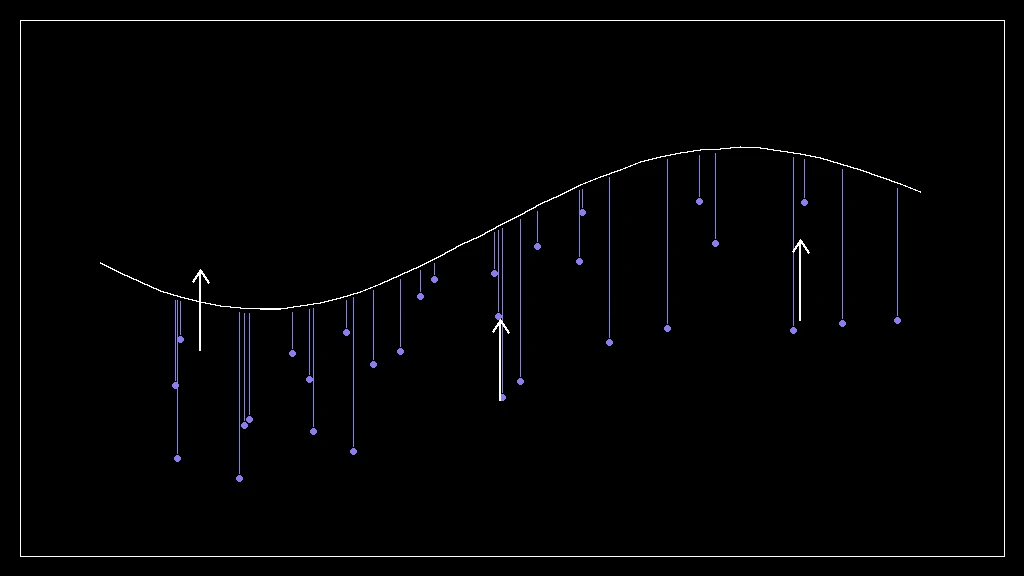
The same decay curve that governs sales follow-up governs payments. A lead contacted within an hour converts seven times more often than one contacted a day later, as we covered in the economics of lead follow-up. Payment reminders decay the same way, only slower. Measured data from reminder providers shows a reminder call placed around day 3 after the due date produces a payment commitment in 32.5% of cases. The same call placed around day 65 produces a commitment only 11.7% of the time. That is a 2.8x difference driven almost entirely by timing, and roughly 70% of those commitments convert into real payments.
The escalation ladder
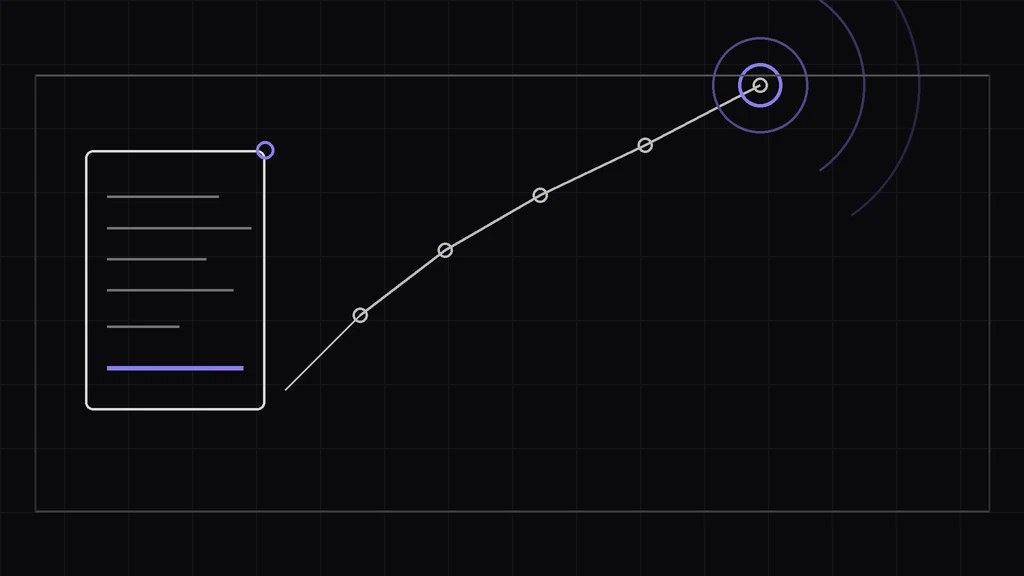
The pattern that works is a ladder with four rungs, each one slightly more direct than the last. Around day 3, a short email with a one-click pay link. Around day 7, a WhatsApp message with the same link, which matters in markets like Estonia where messaging penetration is near universal. Around day 12, an AI voice call that asks for a payment date, offers to resend the invoice, and listens for hardship. If a promised date passes or a client asks for a person, a human takes over immediately.
The voice rung deserves attention, because it is the one that surprises owners most. An AI agent calling about an overdue invoice sounds nothing like a collections robot from the 2010s. It introduces itself, states the amount and the invoice number, and asks when payment can be expected. The same infrastructure that answers your customer support line, which we wrote about in automating customer support, handles the outbound version without a single new hire.
A reminder ladder keeps clients, or it burns them, based on a few design rules. Assume oversight, not bad faith. Include a working pay link in every touch. Never contact a client more than once per channel per week. Hand off to a human the moment a client asks for one or reports a hardship. And honor every promised date, following up only after it passes. Contact only through channels the client actually gave you, keep data inside the EU, and keep a full audit trail of every touch.
The economics collapsed in 2026
Three forces make this the moment. First, the cost of AI voice fell to roughly 8 US cents per minute, against more than 7 dollars for a human-handled call, which makes calling every overdue account a rounding error instead of a staffing decision. Second, the per-commitment economics are published and real: around 2 euros per payment commitment won at day 3 versus roughly 5 euros at day 65. Third, the European attempt to impose a hard 30-day payment cap is stalled in the Council, which means late payments are getting worse and the law will not save anyone soon. An owner waiting for Brussels is waiting on a system that is not coming.
Run the arithmetic on a mid-sized firm. A service business turning over €600,000 a year, with the European average of 12% of revenue arriving late, carries around €70,000 in late money at any moment. A collections agency recovering that would keep between €10,000 and €17,000. A reminder ladder that pulls even half of it back within 30 days costs a few hundred euros a month in tooling and voice minutes, and it gets there without handing the client relationship to a third party. The alternative is not a cheaper agency. The alternative is the money never arriving at all.
Start with the ledger, not the tooling
The practical first step has nothing to do with software. Export your overdue list, sort it into aging buckets, and ask one question: who is calling these people today? For most businesses the answer is nobody, and that nobody is the automation gap. The integration layer is easier than owners expect, because accounting platforms expose the ledger through APIs and European e-invoicing is pushing invoices into machine-readable formats anyway, a shift we mapped out in the e-invoicing piece. The rules stay deterministic. Aging buckets and promised dates decide who gets contacted. The AI writes the words and makes the call.
The invoice that calls back is not a gadget. It is the difference between revenue that waits and revenue that arrives. In 2026 the only question left is the day you start.