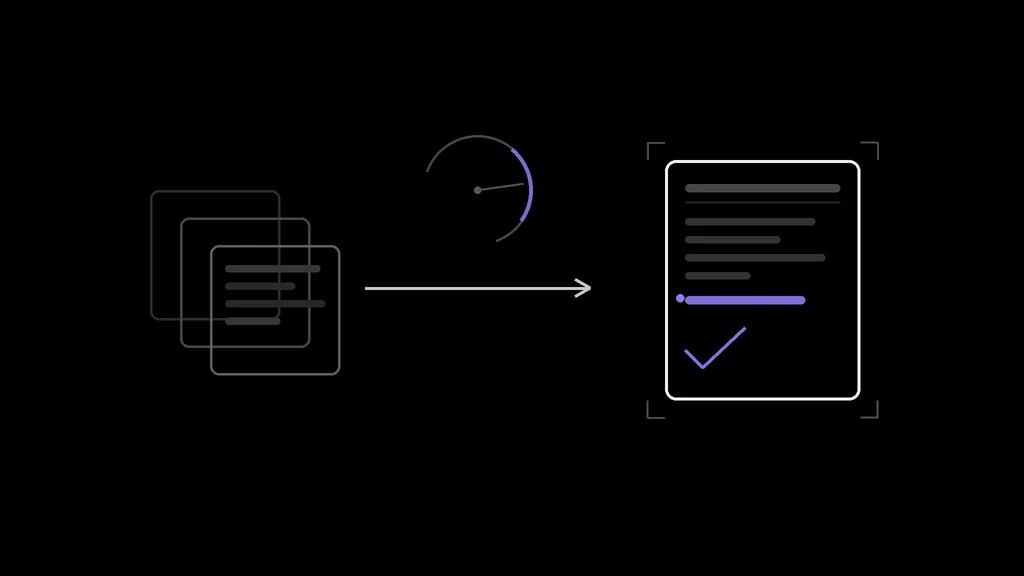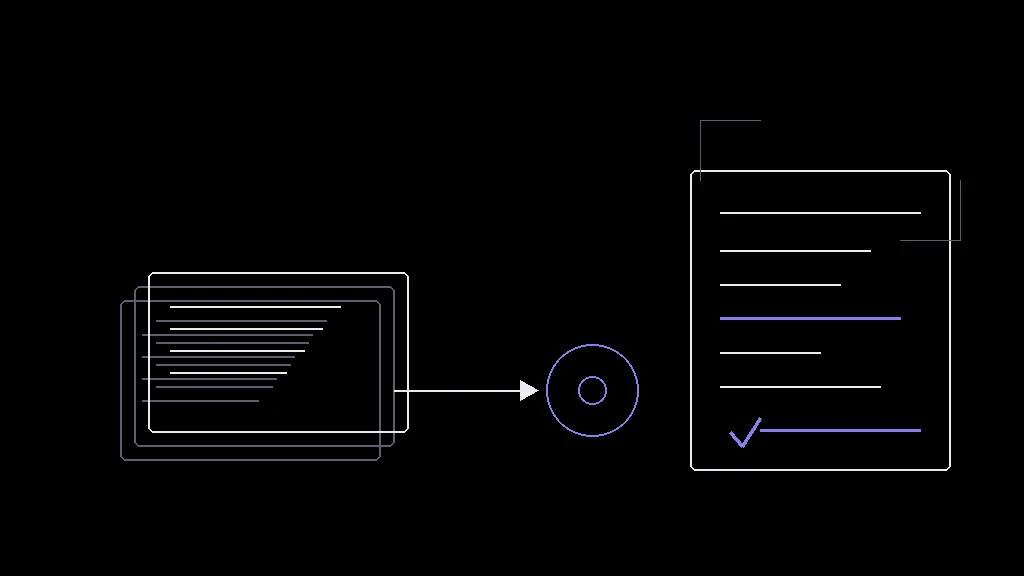
Freight forwarding is a margin business dressed up as a logistics business. The routing, the customs work and the carrier relationships are all table stakes. What actually decides whether a small or mid sized forwarder grows is whether the quote leaves the building while the shipper is still comparing options.
That window is shorter than it used to be, and it is now measurable. Shippers collect three quotes for a lane in the same afternoon. The one that arrives first sets the anchor, and the other two have to argue their way back from a price they did not choose.
The enquiry is answered eighteen hours late
Not because anyone is slow. Because the quote is assembled by hand, one lane at a time, by people who also answer the phone.
An enquiry arrives with the lane, the weight, the equipment and the loading window, usually somewhere between five email threads and a phone call. Somebody has to find the current rate, check whether the lane is on contract or spot, apply surcharges, apply margin, draft the reply, and send it. That is twenty to forty minutes of skilled attention per quotation, and it never happens first, because there is always a shipment in trouble that needs the same person.
The 2026 lead response benchmarks explain why this hurts more than it feels like it should. Aggregated studies of B2B inbound put the median first response at roughly 42 hours, with a second sample averaging 47. Only 7 to 23 percent of companies reply inside five minutes depending on the study, 74 percent of 573 businesses missed that window in one 2026 sample, and a mystery shopping test across 1,000 companies found 63.5 percent never replied at all. Freight is not better than the average. It is usually somewhere in the fat part of that distribution.
Take a forwarder receiving 20 quote enquiries a day across 250 working days, winning 22 percent of them at an average gross margin of 120 euro per shipment. That is 5,000 quotations a year, 1,100 shipments, and 132,000 euro of gross margin. If answering first lifts the win rate by six percentage points, the same quotation volume produces 1,400 shipments and 168,000 euro. The gap is 36,000 euro a year, earned by being the first reply rather than the best price. The labour on top of that is 20 quotes a day at 25 minutes of lookup, rekeying and drafting, which is better than eight hours of skilled time every day spent assembling information that already exists in your own systems.
Those numbers are illustrative, and you should replace them with your own within an afternoon. The point is the shape: the money does not leak out of the rate. It leaks out of the response time, and it leaks slowly enough that nobody ever sees it in a P&L.
Where the hours actually go
Five places in the enquiry to quote workflow consume time that is provably clerical. None of them require pricing authority to be handed to a machine.
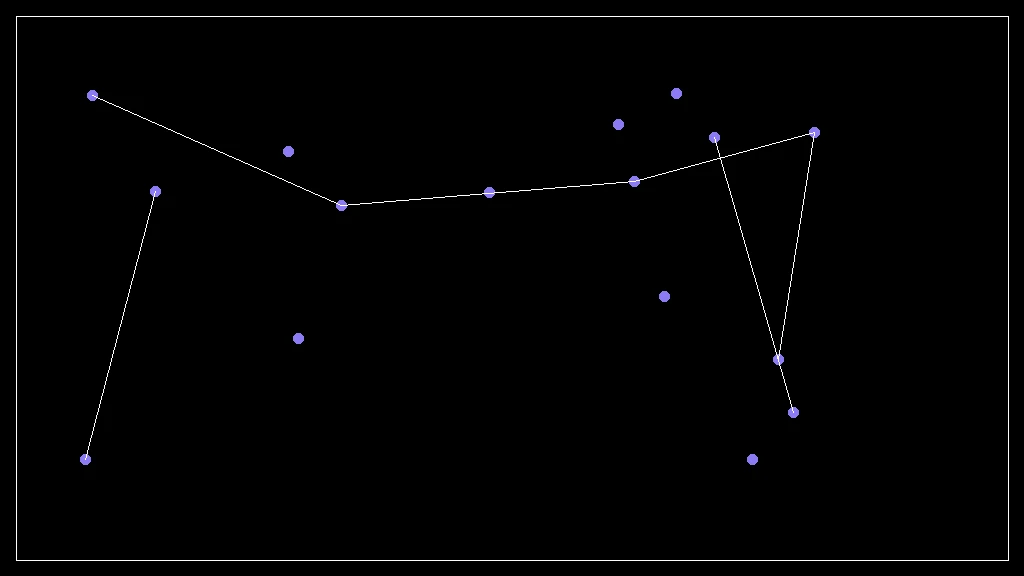
- Rate sheet parsing. Carrier rate sheets arrive as multi tab spreadsheets, scanned PDFs and email bodies. Retyping them into the rate system costs a rate management team two to four hours per carrier per month, and every hour of that is a delay between the rate landing and the sales desk being able to quote from it. An extraction pass reads the sheet and returns clean rows of origin, destination, lane, equipment, base rate and validity, which the human reviews in batches instead of typing.
- Enquiry intake. A mailbox is not a queue. The agent reads the enquiry, extracts lane, weight, dimensions, equipment, loading window and any special handling, then either creates the quote record or asks the one clarifying question that is missing. This is the step that decides whether a quote goes out in ten minutes or in the evening.
- Draft quotation. With the rate table clean and the enquiry structured, the draft quote is assembly, not judgement. The agent builds it from your own rate and margin rules and hands it to an operator to approve, adjust or reject. The operator still prices the deal. They stop typing the part that has never needed a human.
- Follow up on open quotes. Between 40 and 60 percent of quotes never get a second contact. A follow up sequence that fires on day two, day five and day twelve, with the content written for that specific lane, converts work that was already paid for. This is usually the free win in the whole build.
- Proactive status updates. The same structured data that builds the quote also feeds the shipper. Automated status messages with a human escalation path do not just save time, they reduce the inbound where-is-my-shipment traffic that is eating the day in the first place.
What stays human, permanently
The dividing line is not complexity and it is not cost. It is consequence. Anything with legal, customs or credit exposure keeps a named signature on it.
Price setting on exceptions, customs filings, claim responses, credit terms and contract negotiations stay exactly where they are. The agent drafts, the licensed person signs. That is also the reason a serious deployment is auditable by design: every draft, every approval and every sent price is logged with who released it, which is what a regulator or an insurer will ask for.
Stop measuring how many quotes you sent. Measure the elapsed time between an enquiry arriving and a priced, deliverable specific quote reaching the shipper, reported as a median and a 90th percentile. A median under fifteen minutes changes which deals you are in the running for. A median of eighteen hours means most of your quoting effort is a courtesy.
| Workflow step | Verdict | Why |
|---|---|---|
| Rate sheet parsing | Automate | Structured copying between two systems. Human reviews in batches |
| Enquiry intake and qualification | Automate | Extraction from unstructured text, one clarifying question when needed |
| Draft quote from rate and margin rules | Assist | Agent prepares, operator approves or adjusts before anything is sent |
| Exception and spot pricing | Human only | Commercial judgement with money attached |
| Customs filings and claims | Human only | Licensed and legally consequential. Liability cannot be delegated |
| Quote follow up | Automate | The contact was already earned. Recovery, not new outreach |
| Shipment status updates | Automate with escalation | Removes the inbound traffic that steals quoting time |
The build, in four weeks
Speed of light means parallel work, not a longer roadmap. Audit and data access happen in the same week.
Week one audits the workflow and instruments it, because the only way to prove the change is to measure the median before it moves. Weeks two and three build rate sheet parsing and enquiry intake, which are the two steps that stop the retyping. Week four puts the draft quote and the follow up sequence behind an approval screen, runs a pilot on a subset of lanes, and hands over documentation and monitors. Total elapsed time for the standard deployment is two to four weeks, and the pilot is measured against the baseline from week one rather than against a feeling.
| Tier | Price | What it covers | Best for |
|---|---|---|---|
| Automation Blueprint | Free | Enquiry to quote workflow audit, response time baseline, hours map and a ranked opportunity list | Any forwarder who wants the numbers before committing |
| Growth Infrastructure Setup | From 3,000 euro setup + 2,000 euro per month | Rate sheet parsing, enquiry intake, draft quotes behind an approval screen and the follow up sequence | Teams quoting daily who want the first wins inside a month |
| Scale | From 5,000 euro setup + 4,000 euro per month | Continuous build capacity across quoting, operations and shipper communication | Forwarders rewriting several workflows at once |
Where to start this week
Five actions that cost nothing and take one afternoon. Do them before talking to any vendor, including us.
- Pull the last 100 enquiries and timestamp two moments: when the enquiry arrived, and when the quote was sent. That distribution is your starting point and it is usually worse than anyone inside expects.
- Split those 100 into won and lost, then compare win rate for quotes sent inside one hour against quotes sent after a day. If there is no difference, you have a different problem than the one this article solves.
- Count the hours your team spends retyping carrier rates into the system in a month. Two to four hours per carrier is the published norm, and it is the cleanest automation case there is.
- Count how many sent quotes ever receive a second contact. Anything under half is revenue you have already paid to generate and then abandoned.
- Document your margin and surcharge rules in one page. You cannot delegate assembly to a machine until a human can state the rules it should follow.
The rate conversation and the price conversation are both downstream of the timing conversation, and timing is the only one of the three you can change this month. The same logic applied to proposals is covered here, and if you want the underlying arithmetic for the whole pipeline, the lead generation ROI breakdown does the maths in public. To see it run on your own enquiry flow, start with the free Automation Blueprint or look at how an engagement works.