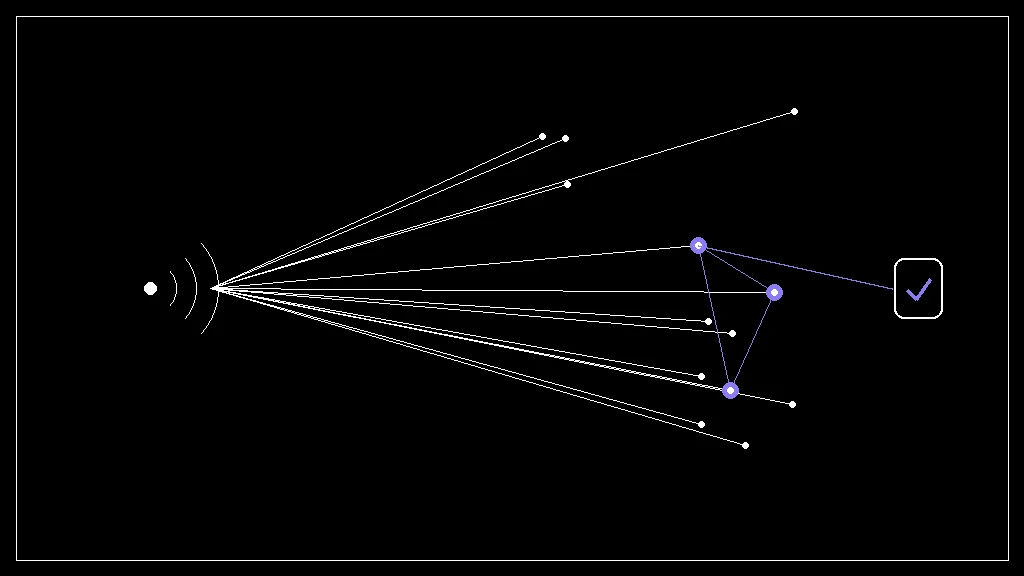
Ask an assistant for the three best accounting firms in Tallinn, or for automation partners for a 40-person manufacturer, and it answers in about four seconds. Then it stops. No page two, no sponsored slots, no position eleven to scroll past. For a growing share of European buyers, the names inside that answer are the shortlist, and everything absent from it is competing for a conversation that will never happen.
The consideration set collapsed to three names
Vendor research used to leave a paper trail. A buyer opened twelve tabs, compared features for three weeks, and eventually emailed four companies. That motion produced leads you could count. The new one produces a single question and a single answer. The buyer asks an assistant to compare providers for their size and city, reads three names, and contacts those three. The research that used to happen on your website now happens somewhere you cannot see, and the outcome is already decided before the first click.
The traffic data has started to show it. SE Ranking tracked 101,574 websites across 250 countries and territories and found that referral traffic from ChatGPT hit an all-time high in May 2026, rising 36.7% in a single month. The European Union posted the largest regional jump at 42.7%, ahead of the United Kingdom at 38.7% and the United States at 23.2%. That measurement only counts the people who clicked through to a website. It excludes the larger group who took the answer and called one of the named companies directly.
Where the shortlist actually comes from
An assistant builds an answer from two layers: what the model learned during training, and what it retrieves live from the web when the question needs current or commercial detail. Both layers lean on external sources rather than on your own marketing. Reviews, industry roundups, editorial coverage, forums and professional networks carry disproportionate weight, because they are the evidence a model can cross-check. Analysis of citations for brand questions found that roughly 57% of them point at reviews and social proof, which means the question "which company should I use" is rarely answered from the company website itself.
The roundup deserves special attention. Wix Studio analysed 75,000 AI answers and more than a million citations across ChatGPT, Google AI Mode and Perplexity. Listicles captured 21.9% of all citations and 40.9% of citations for commercial questions, which makes the roundup article you are missing from the single highest-leverage asset in the category. A mentioned competitor in six roundups is structurally harder to displace than a competitor with a better homepage.
What a machine can actually read from your site
Retrieval only works on content that can be parsed. Most AI crawlers do not execute JavaScript, with Google-driven systems the notable exception, so anything that appears only after client-side rendering risks being invisible to the assistant answering the question. Adobe measures this directly and its own data shows how much is still unreadable even in a digitised sector: across leading US travel brands, hotel homepages scored 63% machine readability and car rental homepages 59%, leaving more than a third of their content unreadable to AI systems.
The fix is structural rather than cosmetic. One page per service, written as plain answers to the questions buyers ask, rendered on the server. Structured data describing the company, its services and its locations. A single canonical description of what you do and what you charge, repeated consistently across your site, your profiles and your directory listings. And pricing or availability stated as data rather than hidden behind a contact form, because an agent cannot fill in a form.
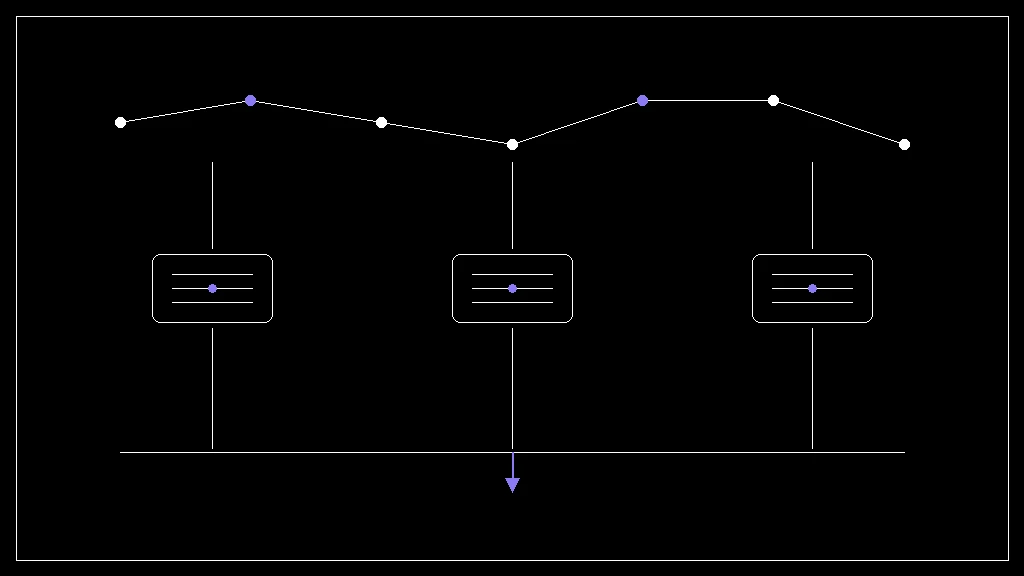
Pick five questions your buyers would actually type, in the language they use: the best firms in your category in your city, a comparison for a company of a given size, and a pricing question. Ask each one across ChatGPT, Perplexity and Google AI Mode. Record which companies are named and how your own business is described when it appears at all. Repeat on the first working day of every month. Twenty minutes produces a trend line more honest than any dashboard, and it shows exactly which competitor holds the slot you want.
Why llms.txt will not save you
A popular piece of advice says to publish an llms.txt file and wait for AI crawlers to read it. The measurement does not support it. Ahrefs studied 137,000 domains and found that around 28% now publish such a file, while of the roughly 38,000 domains with a valid file, 97% received no requests from an AI bot whatsoever. We publish one on this site too, because it takes ten minutes and costs nothing, but honesty matters when an owner is deciding where to spend: it is housekeeping, not a ranking lever.
The lever is being present and legible in the sources that get retrieved. Reviews that say what you are good at. Roundups that name you next to your competitors. Editorial mentions in the publications your buyers read. A site that states its facts in markup instead of in images. None of it is exotic, and all of it is cumulative, which is why the businesses that started eighteen months ago are the ones an assistant now names first.
A recommendation the buyer can act on
Being named is the beginning of the job, not the end of it. If an assistant can tell a buyer that you exist but cannot check whether you have capacity next Tuesday, cannot produce a rough quote, and cannot confirm a price, then the buyer leaves the conversation to find out, and the advantage collapses back to whoever answers first. Discovery without fulfilment just relocates the old problem.
This is where the work stops being marketing and becomes software. An endpoint an agent can call for availability, quoting or booking. A data model that keeps prices and capacity accurate enough to be trusted. An audit trail showing what was requested, by which agent, and what was returned. The patterns are already documented in our own builds: the businesses that book their own clients run exactly this layer, and the internal architecture that makes it safe is covered in agentic workspace deployment.
Three ways to get there, and where each one stops
Owners usually reach for the cheapest looking option and then discover it only covers the first of three layers. The honest comparison looks like this.
| Path | What it covers | Typical cost | Where it stops |
|---|---|---|---|
| In-house effort | Reviews, roundup outreach, answer-shaped pages | Two to four days a month of someone predictable | Content only. The agent still cannot act on your behalf |
| Marketing or GEO retainer | Answer monitoring, digital PR, content refresh | Low four figures per month at agency rates | Discovery. No availability, no quoting, no booking |
| Engineering build | Structured data, entity consistency, agent-callable endpoint | One-off project scoped after an audit, optional retainer | Nothing structural. Needs an owner to keep pricing honest |
We scope this inside our automation engagements rather than selling it as a separate subscription, because the retrieval layer, the data layer and the action layer fail if they are owned by different people. The entry point is the same as everything else we build: a free audit that ranks the gaps by return, starting with our automation work.
You do not need to rebuild your website
The most common reason owners do nothing here is the assumption that it requires a new site. It rarely does. Three changes carry most of the value. First, rewrite the pages that describe your services as answers to real questions, and make sure the text is present in the HTML the server sends rather than assembled in the browser. Second, describe the company once, canonically, and repeat that description everywhere it appears online. Third, expose the one thing every buyer asks for and no agent can guess: whether you can take the work, and roughly what it costs.
A decade old website with two hundred reviews and six roundup mentions will out rank a beautiful new site with neither, because the model is not scoring design. It is scoring evidence. That reframing is uncomfortable for anyone who has recently paid for a redesign, and it is also good news, because evidence is cheaper to accumulate than attention is to buy.
The moment it clicked
We ran the five question test in our own category, in Estonian and in English, using prompts a Tallinn operations manager would actually type. Four competitors were recommended. One of them had a site that looked a decade old and had published nothing in two years. It also had two hundred reviews and appeared in six comparison articles. The assistant was not judging design. It was reporting the evidence it could find, and that company had spent years making itself easy to find.
That is the whole shift in one anecdote. The shortlist is assembled from evidence, not aesthetics, it is assembled before your website ever loads, and the businesses that understand it are quietly taking the best enquiries in their category. The only remaining question is whether your name is in the answer.